English
 Български

 Get
Fast delivery to your doorstep
Real photos of all products
Positive feedback from our customers
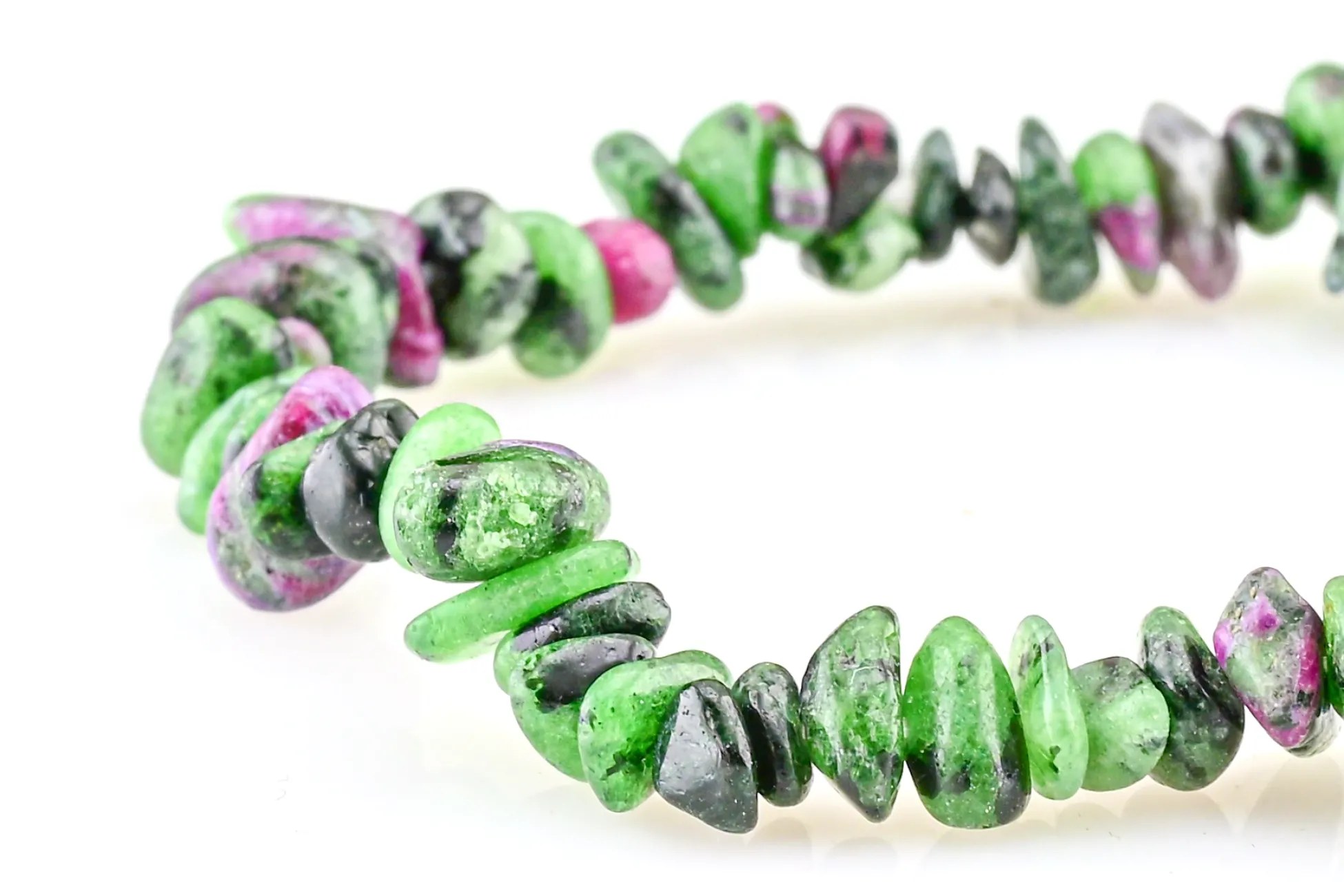
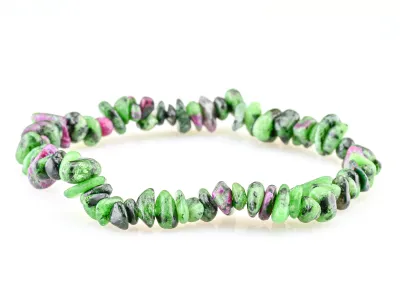
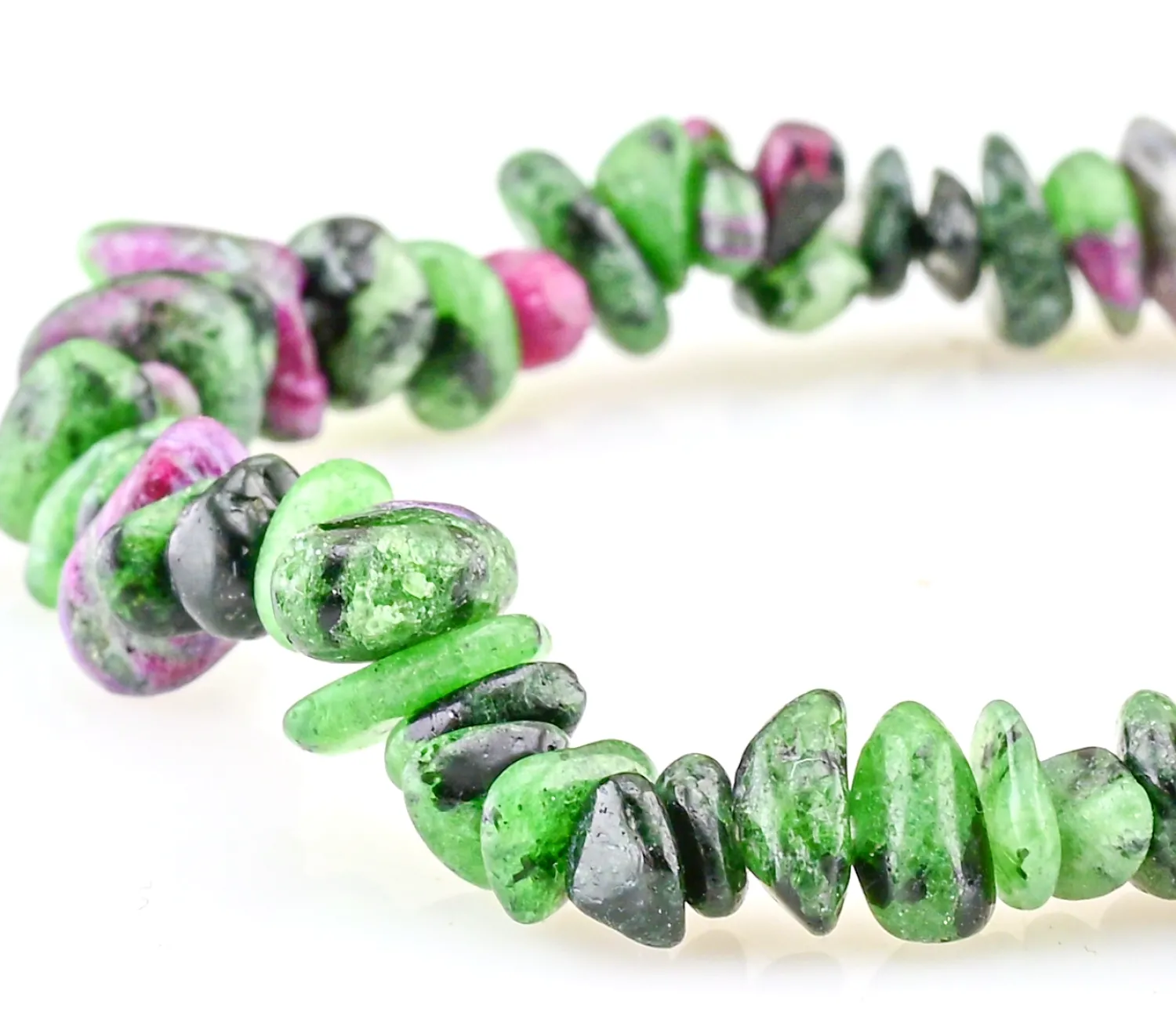
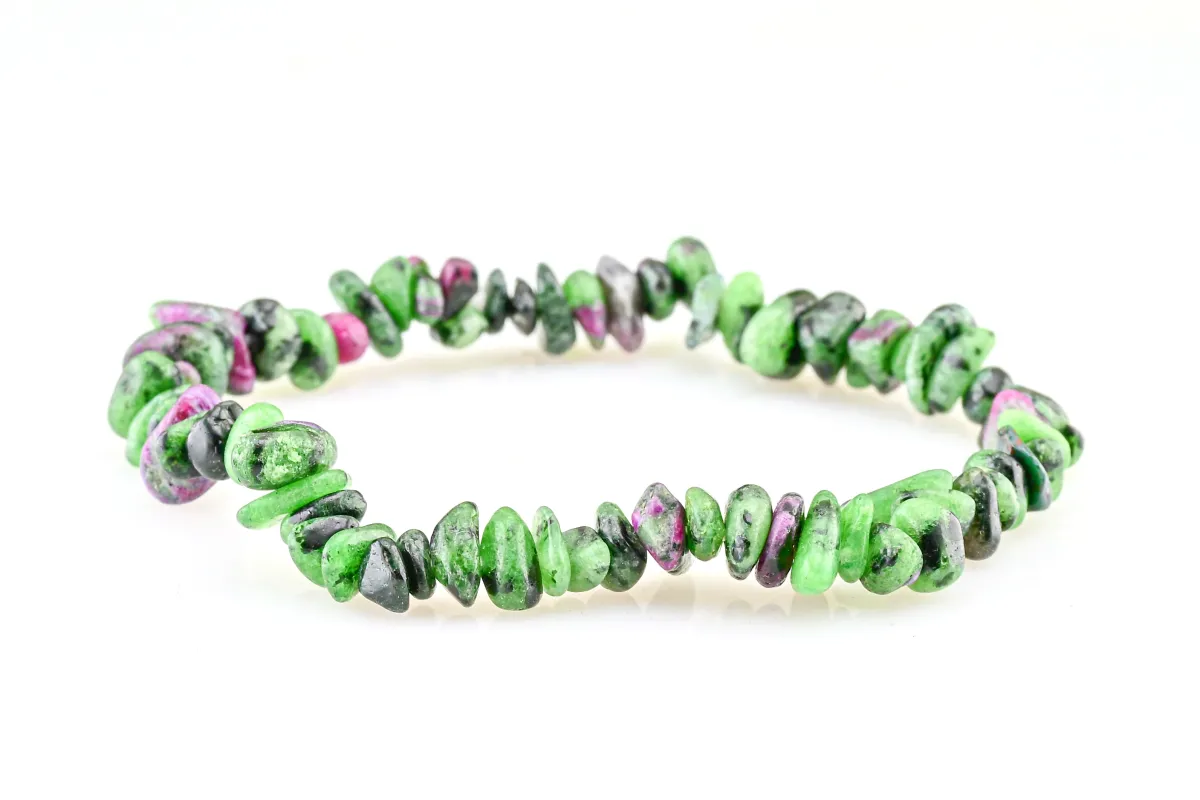
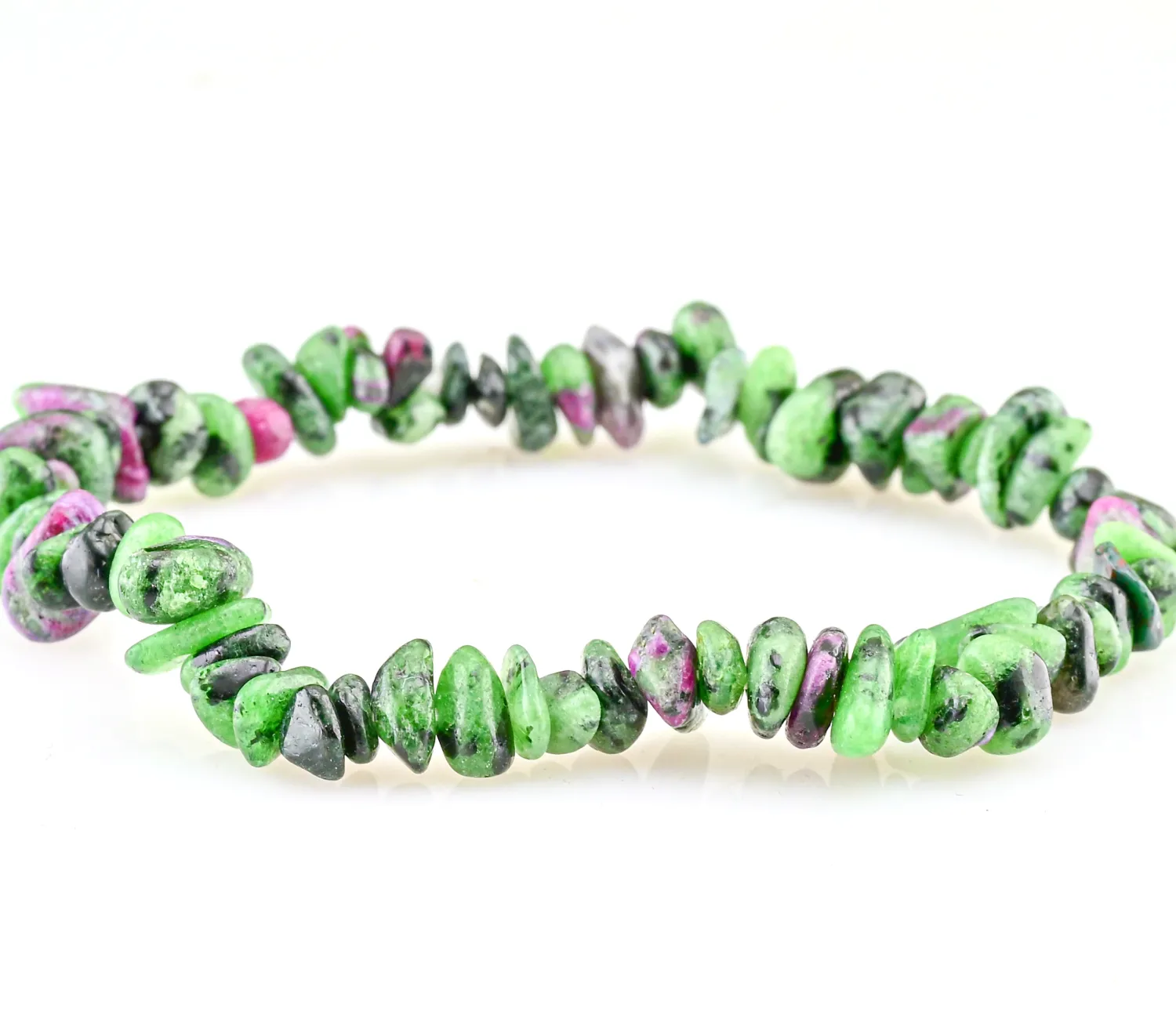
Ruby Zoisite Bracelet
Stone: natural ruby in zoisite
Shape: natural chip beads
Stone size: approximately 5 – 10 mm
Color: green, black and pink-red shades with natural contrasts
Stone origin: Tanzania
Striking, colorful and memorable, this natural ruby zoisite bracelet impresses with its unique combination of deep green, dark accents and bright ruby hues. The natural chip beads give the jewelry an organic look and emphasize the natural beauty of the stone, and each bracelet is completely unique due to the individual patterns and color transitions.
Made on an elastic base, the bracelet is comfortable for everyday wear and easy to combine with other jewelry. This is an accessory with character that brings a sense of natural strength, vitality and individuality.
Ruby zoisite is an unusual natural stone in which the ruby occurs in a green zoisite matrix, often with dark hornblende inclusions. It was discovered in Tanzania in the 20th century and quickly became popular for its striking and unusual color combination. It is the combination of the fiery energy of ruby and the earthy stability of zoisite that makes this mineral so recognizable and valuable.
According to metaphysical beliefs, ruby zoisite is a stone of vital energy, transformation and emotional balance. It is believed to support inner strength, stimulate motivation and creativity, while promoting peace, harmony and release of accumulated tension. It is also often associated with renewal, positive change and synchronization between the heart and mind.
Stylish and distinctive, this ruby zoisite bracelet is a great choice for people who love natural minerals with an unusual appearance and a strong symbolic presence.
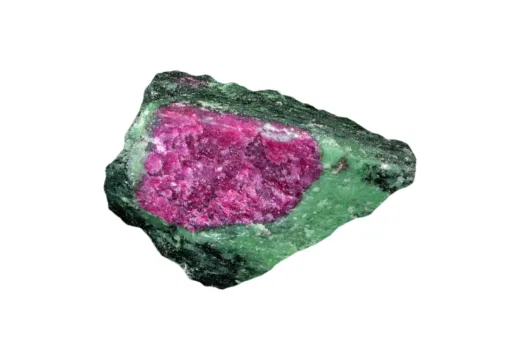
Ruby-zoisite is the natural combination of both ruby and zoisite crystals in a single specimen. It is also known as 'anyolite', a name derived from the Masai word for 'green' (anyoli). Other name variations include "ruby-in-zoisite" and "Tanganyika artstone". Ruby-zoisite was discovered at the Longido mining district in northeast Tanzania by Tom Blevins, an English prospector. To this day, Tanzania remains the only source for ruby-zoisite. Blevins had initially thought that he had found vast ruby deposits in 1949, but it later turned out to be a green zoisite matrix with large inclusions of mostly opaque ruby. Ruby-zoisite is also heavily included with black hornblende minerals. Depending on its primary constituents, ruby-in-zoisite can vary tremendously in color, pattern and hardness. Zoisite provides an earthy green color, while ruby inclusions give it pink and red highlights. Zoisite's hardness ranges from 6.5 to 7 on the Mohs scale, whereas ruby has a hardness of 9. Although ruby-zoisite is not fine ruby, it eventually found a purpose in carvings and cabochons. Today, it is one of the most colorful ornamental gemstones available, and the abundance of gemstone material makes it very affordable even in larger sizes.
Quality gemstones can withstand various adverse effects, but they require certain care in order to preserve their beauty and glitter. To enjoy them for a long time, observe the following rules:
How to clean minerals and jewels with gemstones: